
What is Psychometrics?
Psychometrics is the scientific discipline concerned with the measurement of psychological attributes. It aims to quantify otherwise invisible traits such as intelligence, personality, motivation, or aptitude through structured assessments and statistical models.
What Psychometrics Measures
Psychometric tools attempt to evaluate:
- Cognitive abilities (e.g., intelligence, memory, processing speed)
- Personality traits (e.g., conscientiousness, extraversion)
- Aptitudes (e.g., spatial reasoning, verbal ability)
- Educational achievement (e.g., literacy, numeracy)
These attributes are often referred to as latent variables-constructs that cannot be measured directly, but can be inferred from patterns in behavior or responses. This wiki will initially focus on intelligence research, but in the future will expand towards other research in psychometrics.
Key Concepts
Intelligence Quotient
IQ (Intelligence Quotient) is a score you get from a set of varying cognitive tests that compare your mental skills with those of other people your age. Test makers set the average score at 100, with one standard deviation being 15 points; most people fall between about 85 and 115.
IQ tests don’t measure just one thing. They tap many abilities-for instance, spotting patterns quickly (fluid intelligence), recalling learned words and facts (crystallized intelligence), and keeping several digits in mind at once (working memory). These are only a few of the many skills the tests sample. Because most mental skills overlap, people who score high in one area tend to score high in others. Psychologists call this overall overlap "g" for general intelligence. However, this overlap is not just a statistical phenomenon; it has deep roots and empirical standing in neuroscience, biology, genetics, and psychology, as we show throughout the wiki.
IQ tests act as a statistical proxy for the g factor. Among intelligence researchers, there is a strong consensus on the existence and importance of the g factor, and the effectiveness of IQ tests in measuring it. One prominent psychologist conveys it well:
Verbal definitions of the intelligence concept have never been adequate or commanded consensus. Carroll’s (1993) Human Cognitive Abilities and Jensen’s (1998) The g Factor ... essentially solve the problem. Development of more sophisticated factor analytic methods than Spearman and Thurstone had makes it clear that there is a g factor, that it is manifested in either omnibus IQ tests or elementary cognitive tasks, that it is strongly hereditary, and that its influence permeates all areas of competence in human life. What remains is to find out what microanatomic or biochemical features of the brain are involved in the hereditable component of g. A century of research ... has resulted in a triumph of scientific psychology, the footdraggers being either uninformed, deficient in quantitative reasoning, or impaired by political correctness (Meehl, 2006, p. 435).
Intelligence is one of the most important topics in the social sciences. And after more than a century of research, psychologists understand more about intelligence than ever before.
g-Factor, g-Loading, and Reliability
-
g factor (also known as general intelligence) is the common variance across a range of cognitive tasks. Statistically, it’s the first principal component extracted when psychologists run a factor analysis on many subtests, often accounting for 30-50% of the total score differences among individuals. Conceptually, g sits at the top of hierarchical models (e.g., Cattell-Horn-Carroll), predicting broad abilities such as verbal comprehension and fluid reasoning, and it correlates modestly yet consistently with real-world outcomes like educational attainment, job performance, and even health indicators. Read our article on the g factor.
-
g-loading is the degree to which a test or subtest correlates with the g factor or general intelligence. A higher g loading means the task is drawing heavily on general intelligence, and figures above 0.8 are generally considered to be great. g-loadings are often derived from a factor analysis, and high g-loadings are prized when the goal is to estimate overall cognitive ability efficiently.
-
Reliability is the consistency of test scores across time, forms, or item samples, quantified by coefficients such as test-retest, split-half, or Cronbach’s alpha. Full-scale IQ batteries typically aim for reliabilities above 0.90, yielding a small Standard Error of Measurement (SEM), so an observed score of 110, for example, likely reflects a “true” score within ±3-4 points. Without high reliability, even a strongly g-loaded test cannot be trusted for diagnoses, research comparisons, or tracking developmental change, because score swings could reflect measurement noise rather than real differences in ability.
Full Scale IQ (FSIQ) and Other Indices
FSIQ is formed by aggregating scores from a diversified set of cognitive tasks (reasoning, memory, verbal comprehension, visual-spatial analysis, processing speed, and so on), each chosen for its strong loading on g.
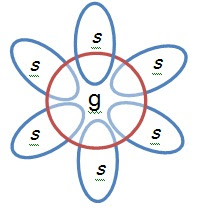
Because the tasks sample different mental operations, their task-specific noise tends to cancel out when combined, while the shared variance (the influence of g) accumulates. This makes FSIQ the most reliable single summary of g and overall cognitive ability: it minimizes measurement error and maximizes predictive validity for broad outcomes such as academic learning, occupational training, and life-course problem-solving.
The most common subtests included in FSIQ tests fall under the following broad factors:
- FRI - Fluid Reasoning Index: gauges how well you solve novel problems and detect patterns without relying on prior knowledge.
- VCI - Verbal Comprehension Index: captures your grasp of vocabulary, verbal reasoning, and general knowledge expressed through language.
- VSI - Visual Spatial Index: measures the ability to perceive, analyze, and mentally manipulate visual-spatial relationships.
- QRI - Quantitative Reasoning Index: assesses understanding of numerical concepts and effectiveness at mathematical problem-solving.
- WMI - Working Memory Index: reflects how efficiently you can hold and transform information in immediate awareness.
- PSI - Processing Speed Index: times the speed and accuracy with which you carry out simple, routine cognitive tasks involving visual information.
Final Thoughts
Psychometrics remains psychology’s most validated discipline; its tests have been replicated across cultures, stand up to rigorous statistical scrutiny, and reliably predict outcomes from academic performance to workplace success. We show this and provide what modern research has discovered about human intelligence throughout the wiki. In large part, we take from what experts have explained in the comprehensive (2023) The Science of Human Intelligence (2nd Edition), as well as Russell Warne's (2020) In the Know: Debunking 35 Myths about Human Intelligence, and of course, the landmark 1998 book, The g Factor: The Science of Mental Ability by Arthur Jensen. This resource hopes to introduce newcomers to psychometrics and to demystify core concepts in the study of human intelligence.